Operating Model Canvas
How the organisation is set up to deliver its strategy, from the work and people to places, information, partners and management, on one page.
Where it fitsStage 3 of 7 · Design: What must the organisation and the offer look like?
What it is
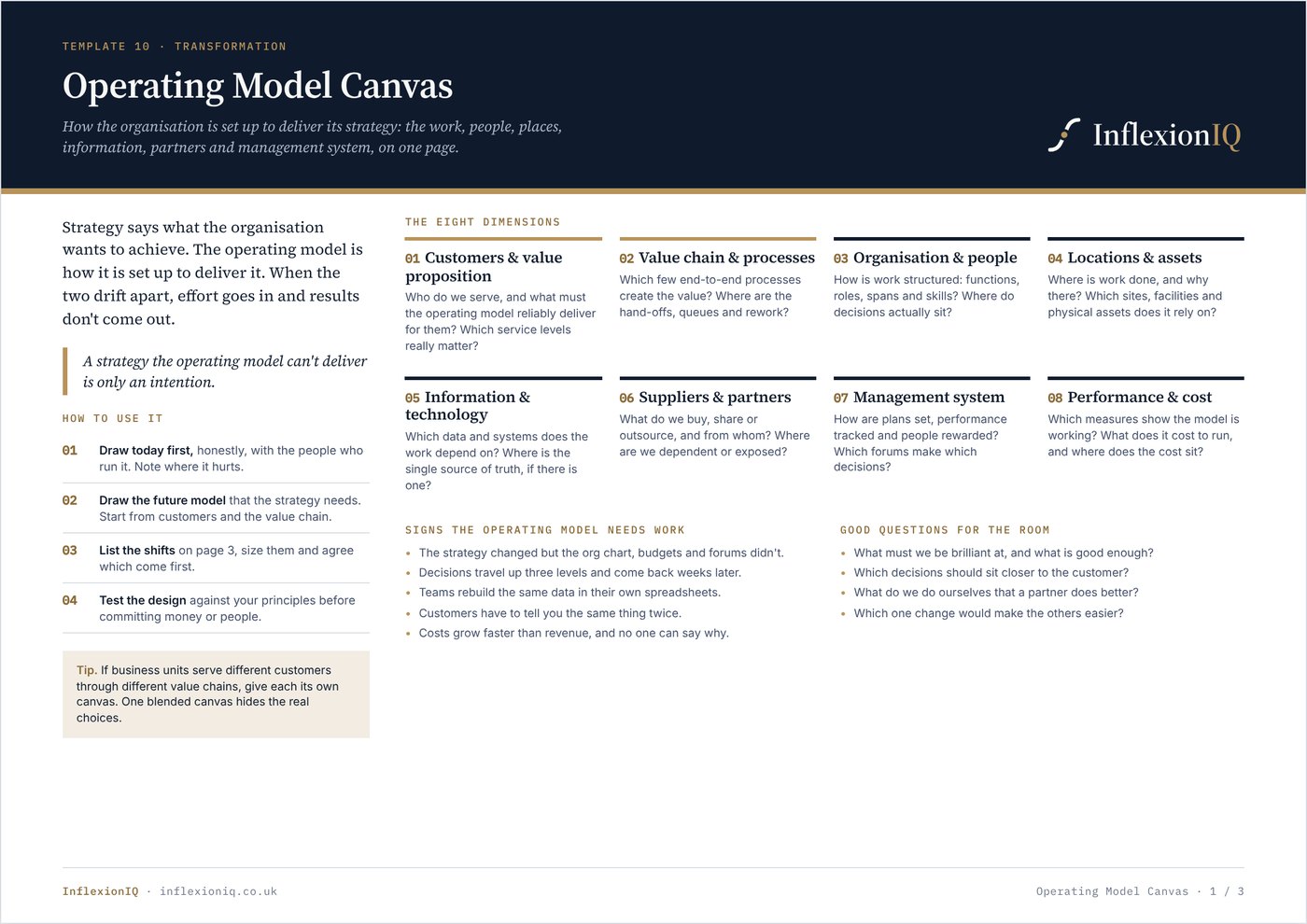
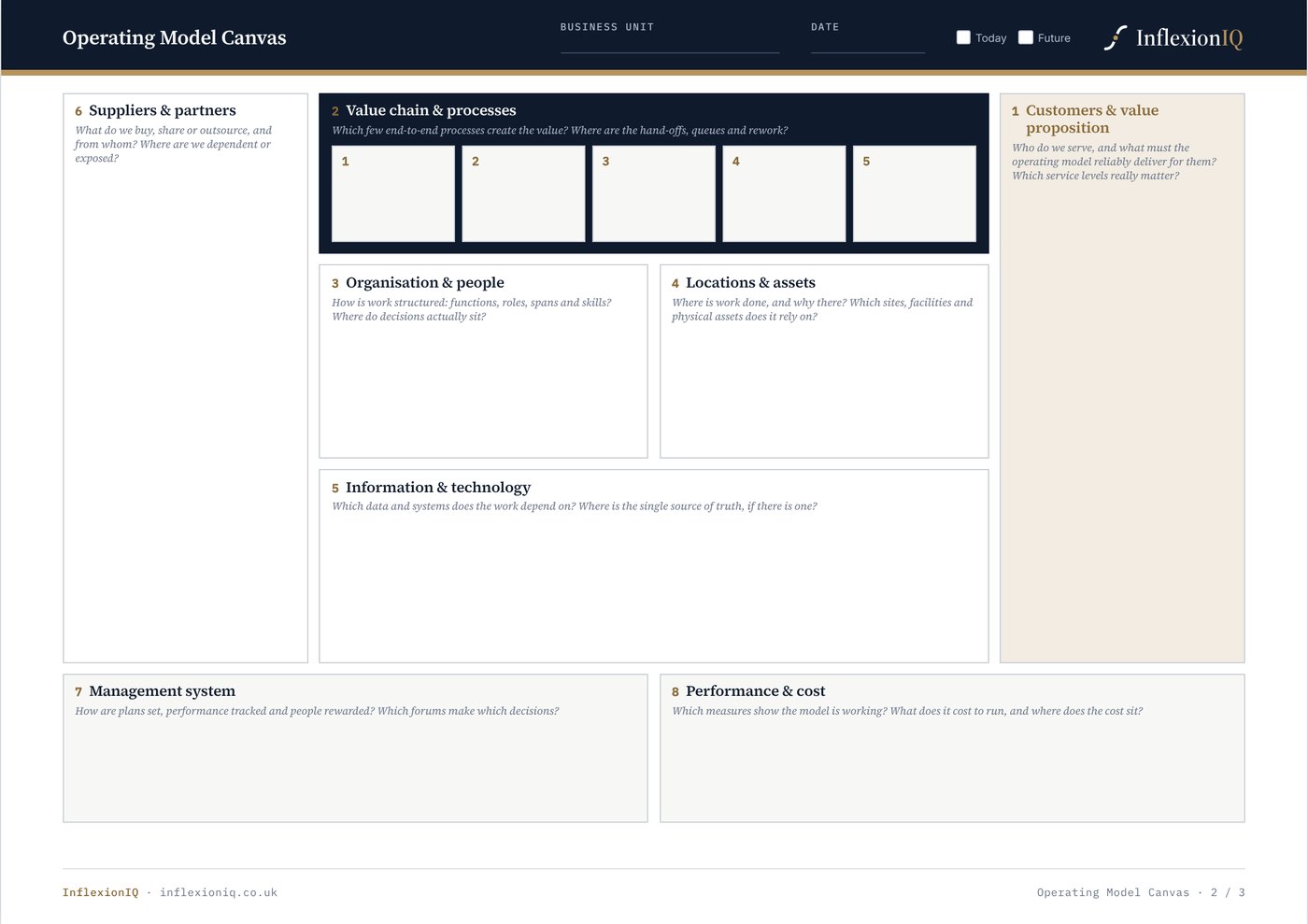
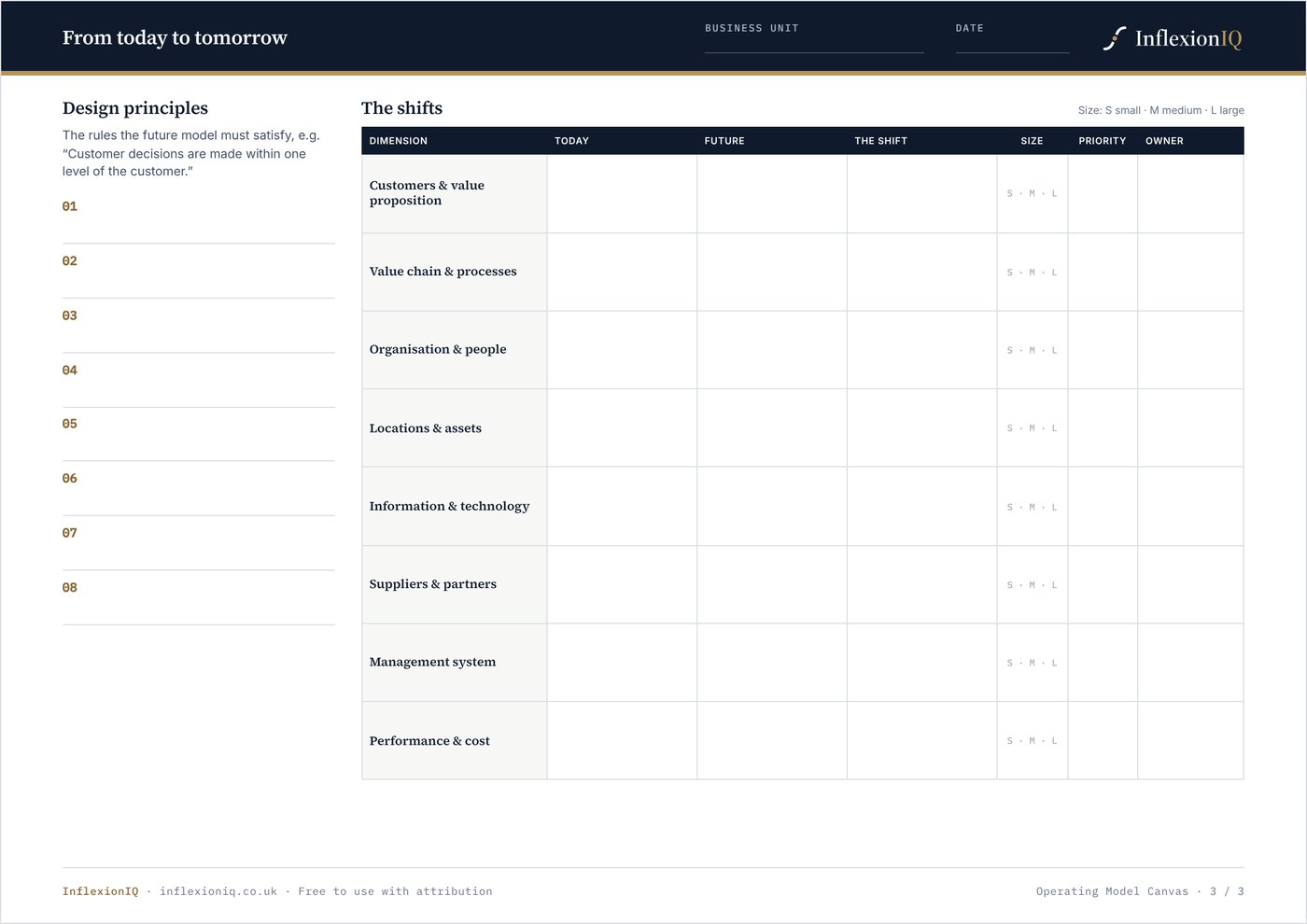
A one-page canvas for describing an operating model across eight dimensions. The guide explains each dimension with the questions to ask. The canvas page lets you draw today's model and the future one side by side. A third page logs the shifts between them, with their size and priority.
Why use it
A strategy the operating model cannot deliver is only an intention. Drawing the model on one page shows where effort goes in and results do not come out, and turns a vague 'target operating model' into a short list of concrete shifts.
How to use it
- Draw today's operating model first, honestly, with the people who run it. Note where it hurts.
- Agree the design principles the future model must meet, such as 'customer decisions are made within one level of the customer'.
- Draw the future model the strategy needs, starting from customers and the value chain.
- List the shifts between today and the future in the shifts log, and size each one as small, medium or large.
- Sequence the shifts and test the design against your principles before committing money or people.
When it helps
- Designing a target operating model after a strategy refresh
- Merging or separating businesses, functions or teams
- Diagnosing why a strategy is not delivering
- Scoping a transformation programme before mobilising it
What is inside
- A guide to the eight dimensions, with questions for each
- An operating model canvas for today and the future
- A shifts log to size and sequence the changes
- Design principles and a worked example
Worked example
To deliver the strategy, the lender redesigned how a mortgage case moves from application to offer.
| Value chain | Today: 14 hand-offs and 21 days to a decision. Future: 6 hand-offs and 5 days. |
|---|---|
| Organisation | Today: processing and underwriting are separate teams on three sites. Future: one mortgage hub with mixed teams. |
| Information | Today: documents arrive by email and are rekeyed. Future: brokers upload once, AI extracts the data, everything sits in one case file. |
| Decision rights | Today: most cases go to a senior underwriter. Future: underwriters have higher mandates, with clear rules for referral. |
| Largest shift | Processing roles change as AI takes over document checks. Size: large. |
What happened next. That largest shift went to the top of the change impact assessment, because it affects processing staff most.
Preview
Questions
What is a target operating model?
A description of how the organisation will be set up to deliver its strategy: the processes, people, locations, information, partners and management system it needs. It sits between the strategy and the detailed design.
Should you draw the current operating model first?
Yes, honestly and with the people who run it. The gap between today and the future model is what the transformation has to close, and you cannot size the gap without both.
Rate and review
How useful was this template?
Your rating and comments help me improve the template and decide what to build next. It takes less than a minute.
Thank you.
Your feedback has been sent. If you have got another minute, share the template with someone who'd find it useful.
More templates
All templates →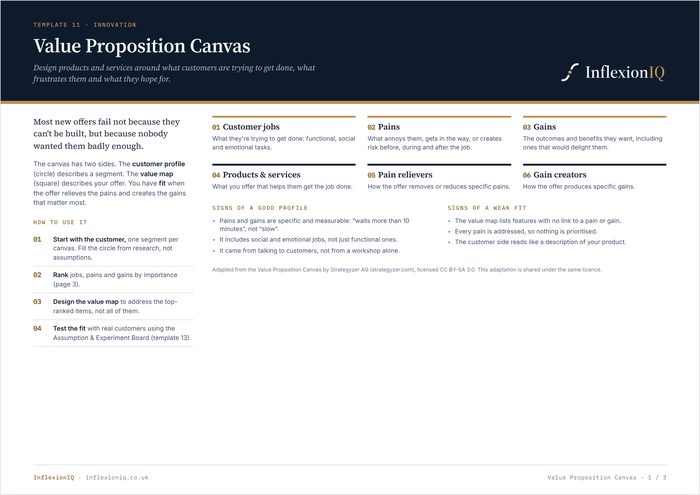
Value Proposition Canvas
Design products and services around what customers are trying to get done, what frustrates them and what they hope for. PowerPointPDFView and download →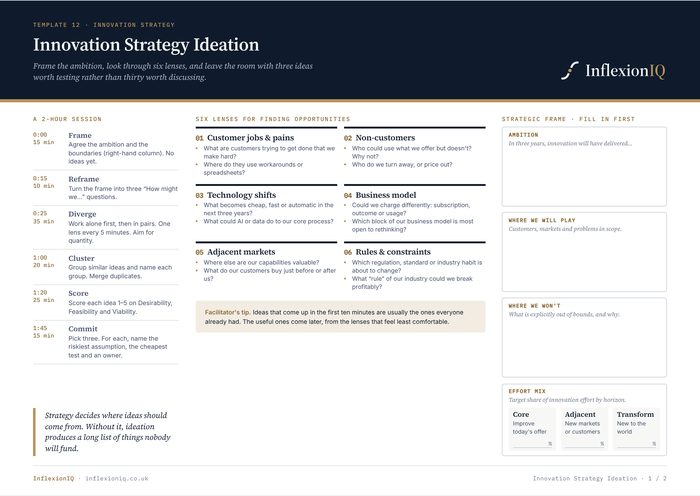
Innovation Strategy Ideation
Frame the ambition, look through six lenses, and leave the room with three ideas worth testing. PowerPointPDFView and download →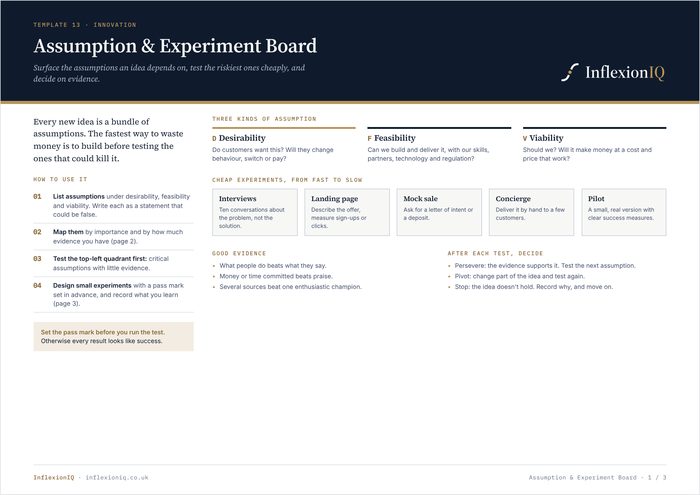
Assumption & Experiment Board
Surface the assumptions an idea depends on, test the riskiest ones cheaply, and decide on evidence. PowerPointPDFView and download →Need something different? Request a template →